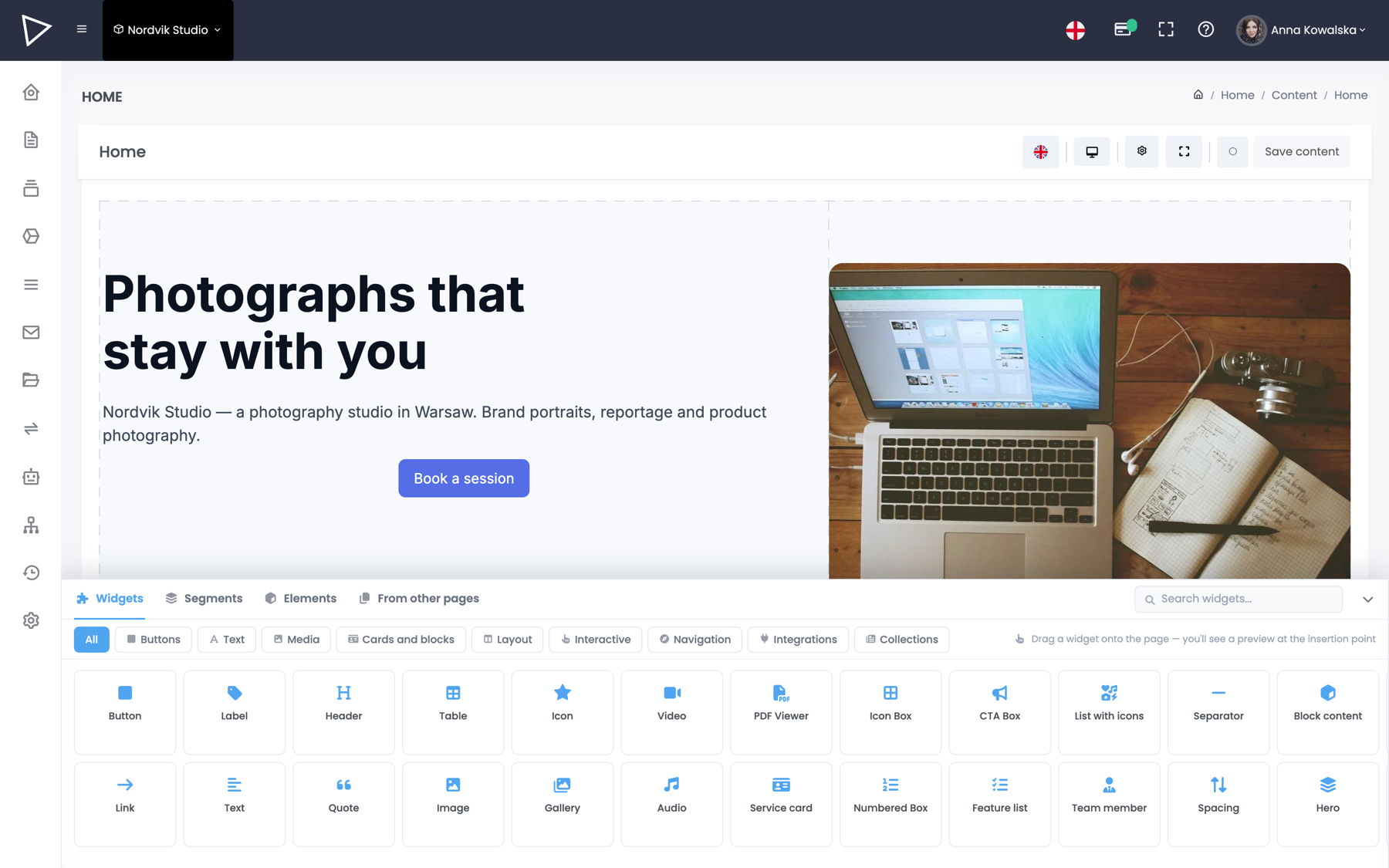
Two modes, one system. Assemble the whole site from ready-made sections and widgets, or take just the content through the API and build the front end your way. The choice is yours.
AI boosted — writes, translates, fills in metaOne system, one account. The difference is who draws the front end.
You decide what a single entry is made of. The listing and the subpages build themselves.
A paginated list of entries, a separate address for every article and an entry in the sitemap. You add a new piece by filling in a form.
A portfolio filtered by client and a separate page for each project, gallery included. Add 42 entries and you have 42 finished subpages.
A grid of services on the homepage and a subpage for each one — a separate address for every phrase your customers type into Google.
A team section on your about page, split by department. A new hire means one form, not a call to the agency.
More than a dozen field types. Add as many as you need and name them your way.
A restaurant menu, a machine catalogue with specifications, a training calendar, job openings, a list of branches on a map, a Q&A base — whatever repeats in your business.
Start from a ready-made template or define your own entry type and get a form, a listing and subpages for it — exactly as with the blog.
Three places where AI saves the most time — and none of them start on their own.
Select the widgets, pick the target languages and run it. Several languages at once, with the formatting preserved.
Describe what the section is about and the assistant proposes the copy. The blank page stops being the most expensive hour of the project.
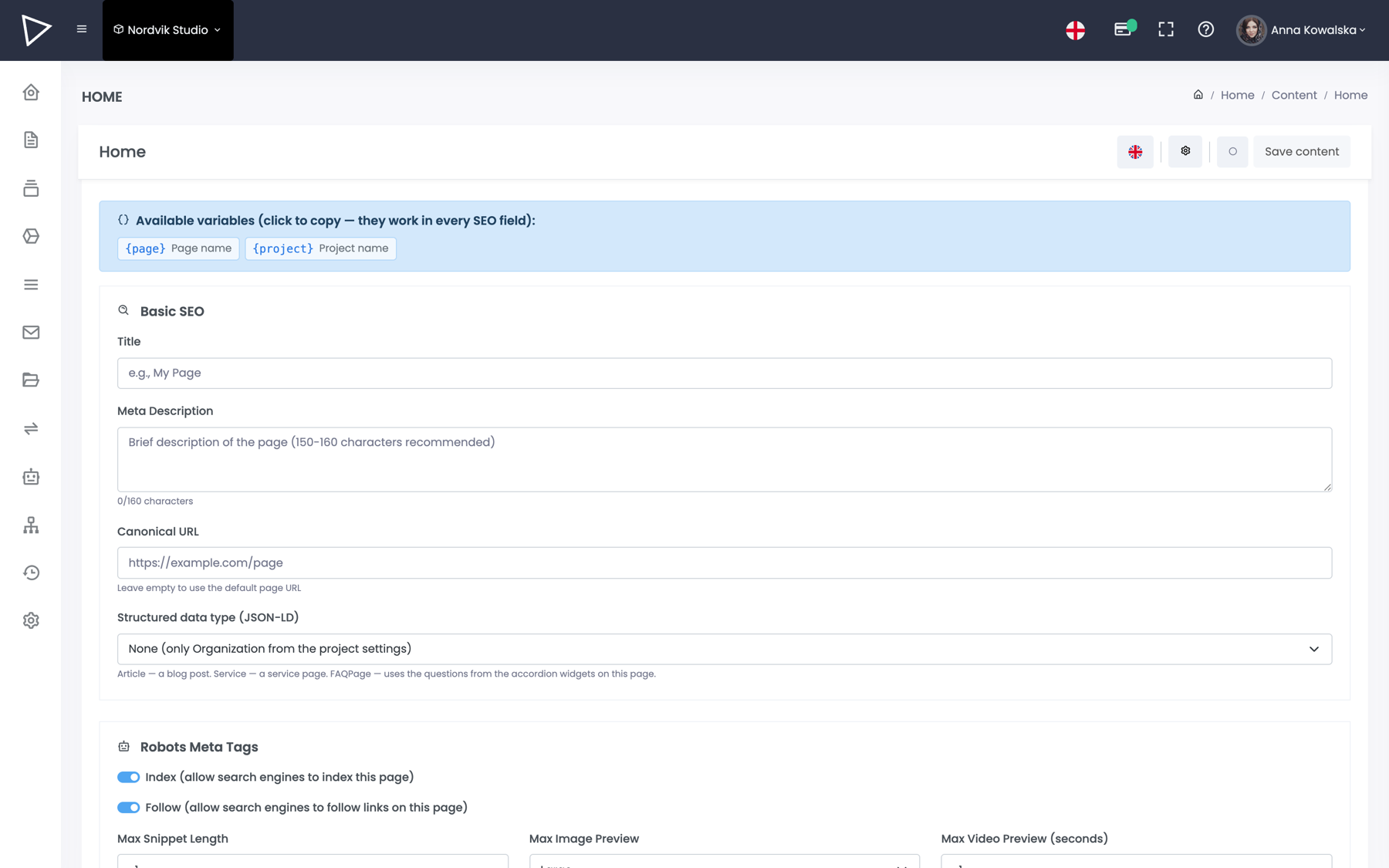
It reads the content and proposes a title and description within the limits Google likes. Separately for each language.
Meta and addresses are set next to the content, not in a plugin. The sitemap and robots generate themselves, and we serve the finished page from a cache at the edge of the network — with no server on your side.
The crawler gets full HTML with the content, not a skeleton to be rendered in the browser.
Generated automatically from whatever is published. You add 301 redirects from the panel.
Automatic size and format variants, with the CDN cache purged selectively after publishing.
Headings, galleries, forms, accordions, timelines, maps, counters and collection grids. And when you add a store — cart, checkout and a product configurator.
Five plans — from a one-person business to an agency running dozens of projects.
Yes. The content moves into collections and pages, and you keep the old addresses through 301 redirects added in the panel — so you do not lose your position in Google.
Yes. You can pull the content at any time through the public API — the same one that feeds your own front end. There is no format only we can read.
No. You create the project yourself, assemble the page from widgets and connect the domain in the settings. A developer only becomes useful once you want your own front end on the API.
Hosting is included — our renderer serves the pages from a CDN cache. You connect your own domain and the SSL certificate is issued automatically.
Handled by people, not bots. On top of that there is a user guide and API documentation, both public and available without logging in.
Yes — the document is part of the terms of service. The servers are located in the European Union.
No card, no onboarding project, no sales call to begin with. And if you would rather talk first — leave your details and we will get in touch.