No jargon. For every feature we say what you actually do and what you get out of it.
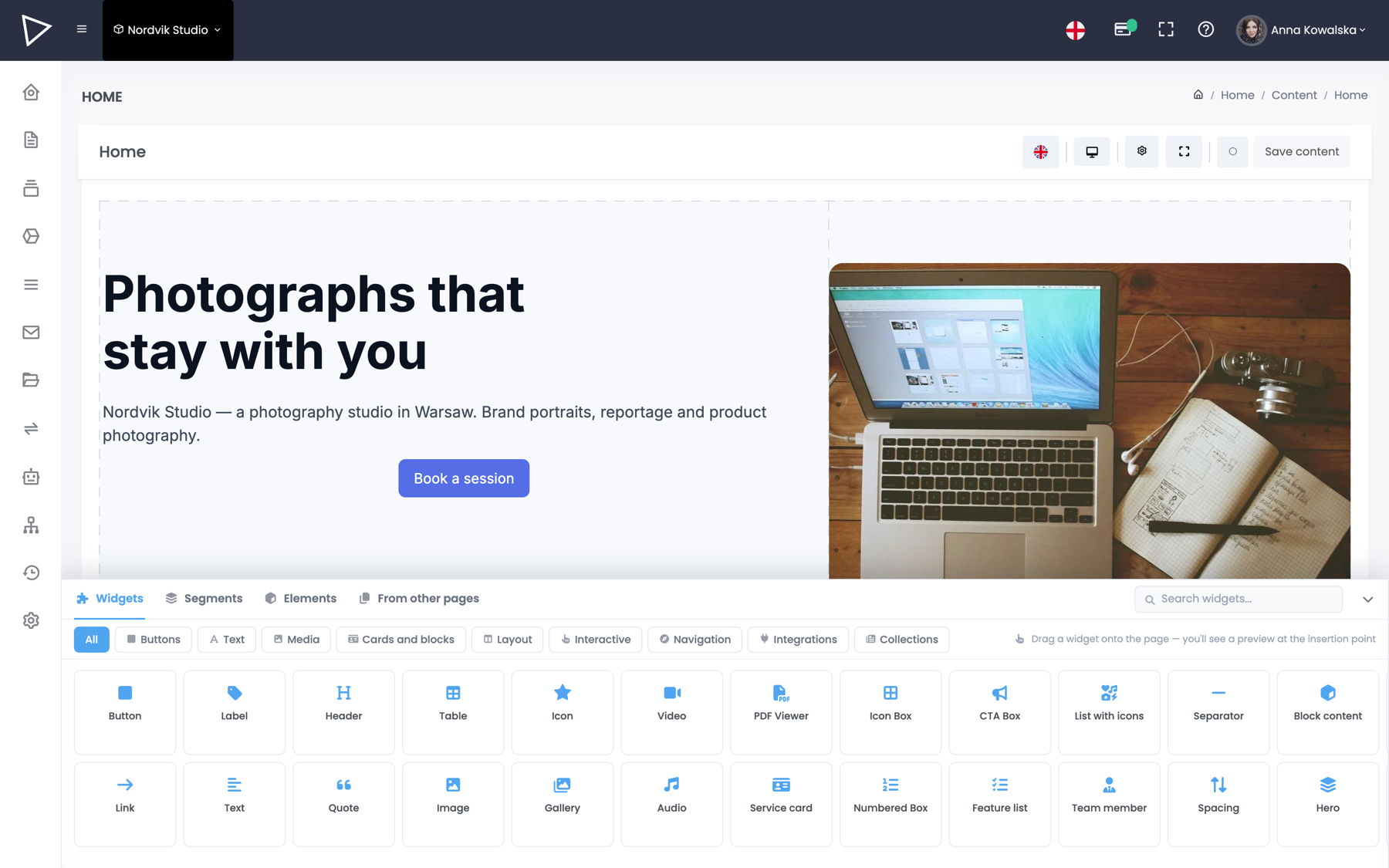
You assemble the page from ready-made blocks: heading, text, images, form, map. Drag them onto the page and set spacing, colours and widths — without touching code.
What you see on screen while arranging is what the visitor sees. The editor clicks on the text and types. There is no preview mode and no surprises after publishing.
Say you show off your projects. Each one has a name, photos, a client and a date. You set that up once — and adding the next project is then a matter of filling in a ready-made form, like a questionnaire.
The project listing and a separate page for each one build themselves. Addresses and sitemap entries included, so Google sees every one of them individually.
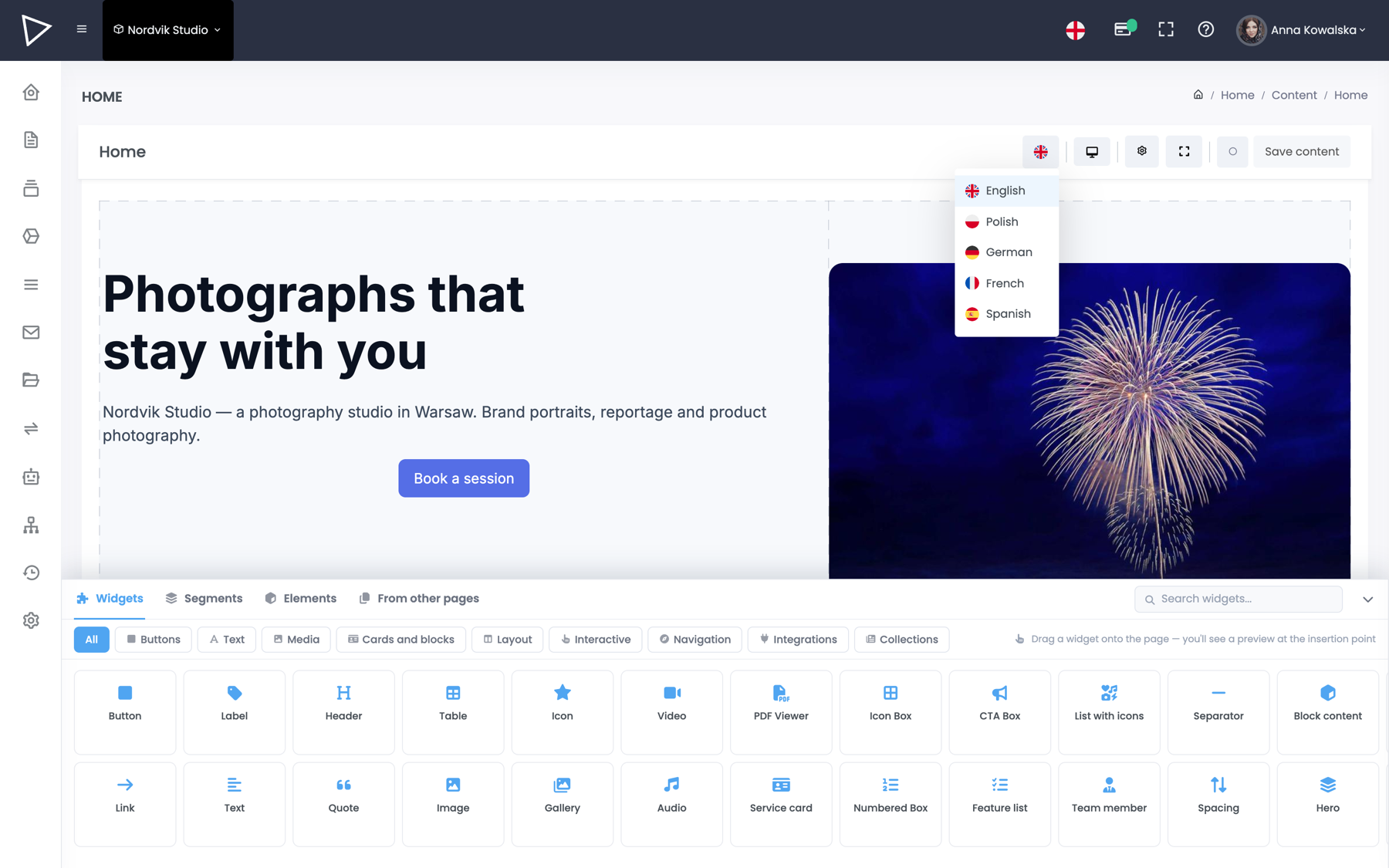
You add a language in the project settings and switch to it in the editor. The layout stays the same, only the content changes — you are not building a separate site for every market.
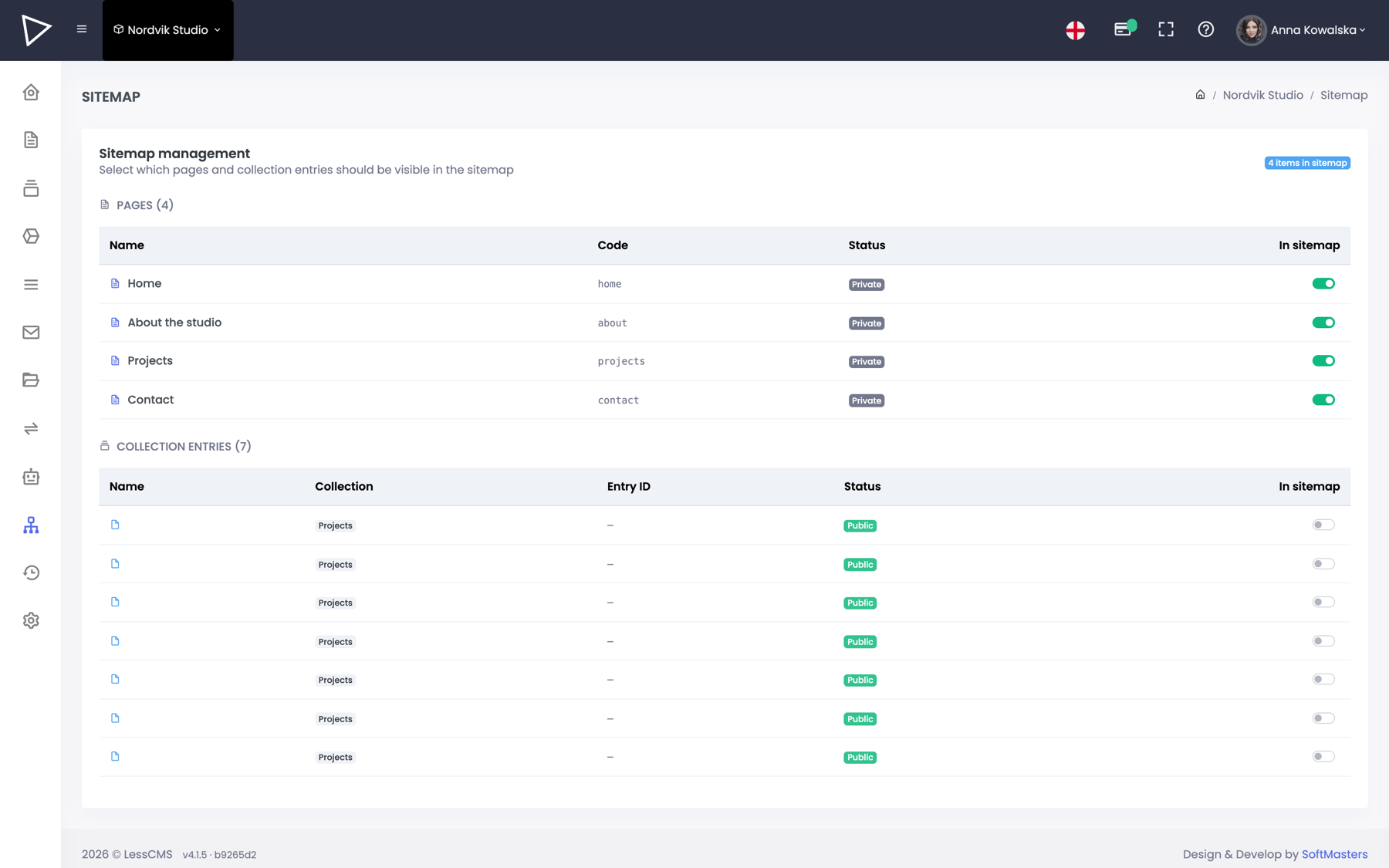
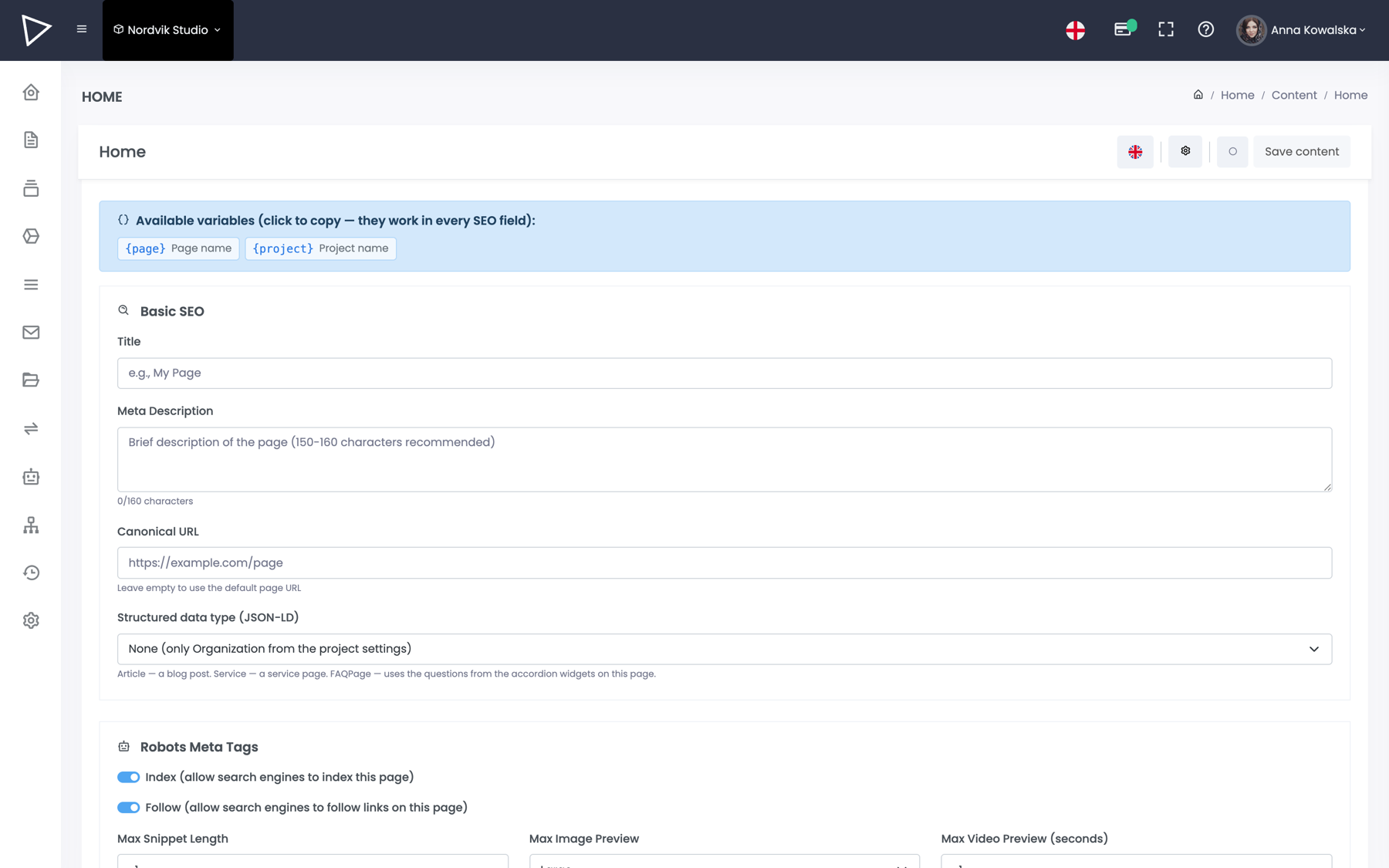
Title and description are set next to the content. The sitemap is generated from whatever is published — a new subpage appears in it by itself, a deleted one disappears.
You add 301 redirects from the panel, so changing an address or moving from another system does not cost you your search rankings.
Three places where AI saves the most time: the blank page, the second language and the search-engine descriptions. Nothing starts on its own and nothing publishes automatically.
Things that other systems make you install separately or configure on a server.
Contact, quote, sign-up. Submissions land in the panel and in your inbox, with consent boxes and spam protection.
A manager with folders and search. You upload the original, we produce lighter versions for phone and desktop — no compression plugins.
An editor sees the content, not the settings. A client only gets access to their own project.
Brand colours, typography and corner radii as project variables. Change them in one place and the whole site follows. There is also a field for your own CSS.
Connect your own domain and the certificate is issued automatically. For testing you get a subdomain, before you even repoint the DNS.
Google Analytics, Tag Manager and your own scripts in the head section — from the panel, without digging into the page code.
A consent banner split by category, ready for GDPR. You configure it in the settings instead of bolting on a third-party plugin.
Menus are built from a tree of items, and repeatable fragments — a footer, a banner, a contact section — live as blocks you place on many pages at once.
After publishing we purge the cache selectively, only for what actually changed. You can also clear it by hand with a single button.
On-demand project backups and an event log: who changed what and when. Every entry and page has its own version history.
You set the address pattern for pages and entries yourself — for example
/realizacje/{slug} instead of identifiers.
The same content available to your application or your own front end. Key, read access, cache headers. Documentation →
Create a project and assemble the first page. No card and no sales call.